Fortress: Recruiting Platform / Candidate Management System
Reengineered a legacy FileMaker-based recruiting database into a modern candidate management system, streamlining recruiter workflows, improving search, and enabling automation across multiple business branches with distinct styles and processes.
This platform is proprietary. The public case study focuses on process, workflows, and UX outcomes—without exposing sensitive data, internal screens, or client metrics.
Role & Scope
- Product Manager & UX Director
- 8-week engagement (Feb–Mar 2021)
- Small third-party dev team + 1 UX Designer
- Owned product direction, client management, UX strategy
Tools & Methods
- Adobe XD for design/prototyping
- Jira + Confluence for delivery
- Remote shadowing & interviews
- Heuristic evaluation
Goals
- Replace legacy FileMaker experience
- Standardize workflows across branches
- Improve search performance and quality
- Reduce duplicate records across locations
- Improve reliability during high-volume recruiting
Overview
Fortitude provides recruiting and onboarding services across the United States and relied on a legacy FileMaker application to track candidates, requisitions, and recruiting activity. The system created daily friction: recruiters juggled printed requisitions, job board research, manual copy/paste into records, inconsistent formatting, and separate databases by location/branch—making it easy to duplicate effort and difficult to maintain consistent workflows.
We partnered with stakeholders to define a replacement platform that preserved what recruiters valued (powerful searching and fast candidate profiling) while removing the failure points: timeouts that lost notes, confusing navigation, limited filtering/sorting, and siloed site databases. The result was a redesigned recruiting platform that supported both outbound sourcing (company-driven recruiting) and inbound candidate requests, paired with automation to speed repeatable tasks and reduce admin overhead.
Key Constraints
- Proprietary platform with limited ability to share internal details publicly
- Needed to support multiple branches/locations with separate "modes" while maintaining shared UX standards
- Required rapid delivery alongside active development (agile delivery with ongoing stakeholder approvals)
What I Led (Product + UX Direction)
End-to-end ownership from discovery through delivery, managing client relationships and cross-functional coordination.
Product Leadership & Delivery
Owned the plan end-to-end: scope, timeline, pricing, stakeholder approvals, and delivery sequencing across discovery → design → build support.
Client & Stakeholder Management
Ran working sessions, maintained alignment, managed tradeoffs, and drove approvals at each milestone.
Discovery
Planned and led user engagements (shadowing + interviews), plus heuristic evaluation of the legacy tool to prioritize the highest-friction workflow failures.
Workflow Design & System Concepts
Designed the target workflows for candidate intake, profiling, search, requisition linkage, and recruiter task flows (including automation opportunities).
UX Artifacts & Dev Readiness
Produced personas, journey maps, flowcharts, wireframes, interactive prototypes, and detailed user stories/acceptance criteria to accelerate engineering.
Design Approvals & Quality
Reviewed/approved UX/UI, tested coded UI, and supported iterative refinement through development.
Discovery
Mixed methods research to understand recruiter workflows, pain points, and opportunities for improvement.
Remote Shadowing
Observed real recruiter behaviors: how requisitions were managed, candidates sourced, and where breakdowns occurred.
Stakeholder Interviews
Gathered requirements and pain points from recruiters, managers, and leadership across multiple branches.
Heuristic Evaluation
Documented legacy FileMaker issues: timeouts, duplicate records, search limitations, and cross-branch visibility gaps.
Key Research Insights
Pipeline Bottlenecks
Research identified stages where delays frequently occur in the hiring pipeline.
Data Fragmentation
Analysis showed the use of multiple tools leading to context switching and data loss.
Communication Gaps
Findings indicated delays or lack of updates in communication between hiring managers and recruiters.
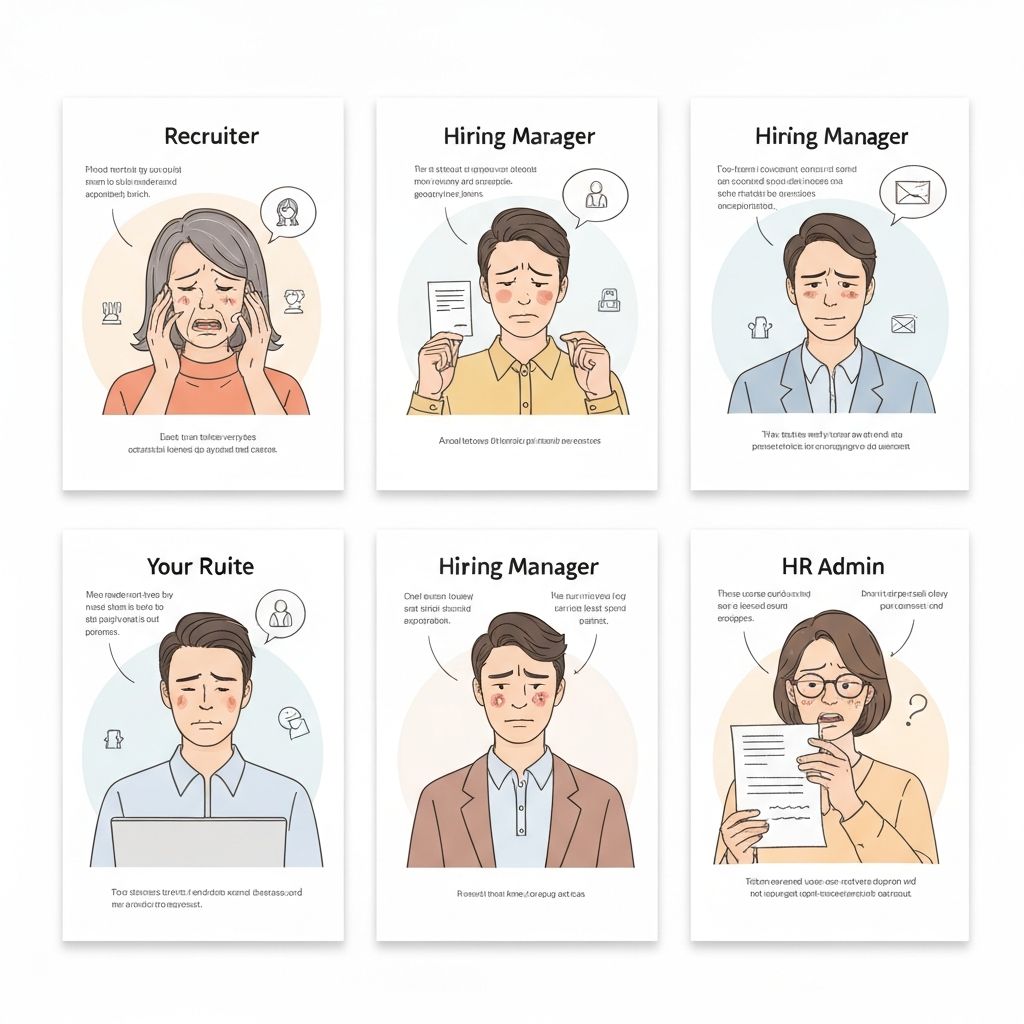
Persona Mapping
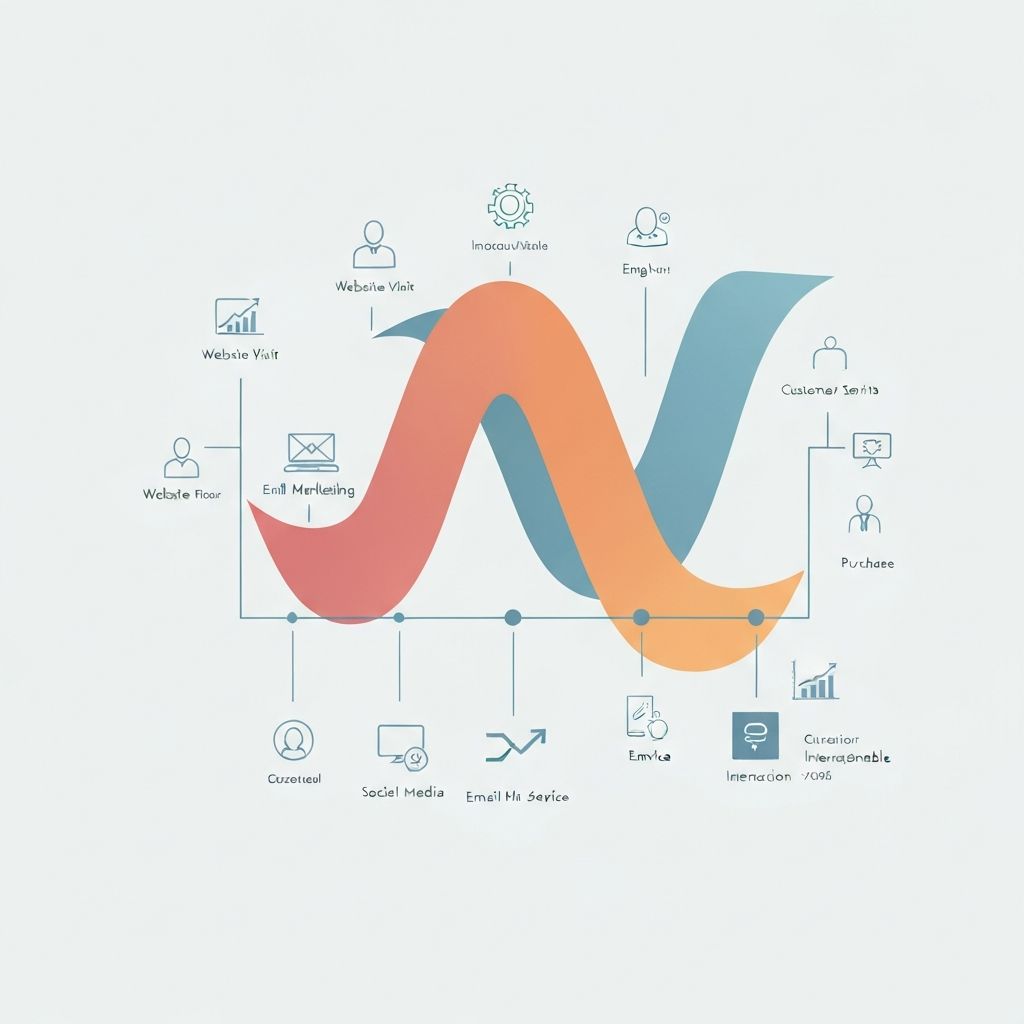
Touchpoint Analysis
Research Summary
Research combined remote shadowing, stakeholder/user interviews, and a heuristic evaluation of the legacy FileMaker experience. We mapped real recruiter behaviors—how requisitions were managed, how candidates were sourced and profiled, and where breakdowns occurred (timeouts, duplicate records, search limitations, and cross-branch visibility gaps). Findings were translated directly into workflow recommendations and a development-ready backlog.
We validated workflows through iterative prototypes and structured feedback loops before development sign-off.
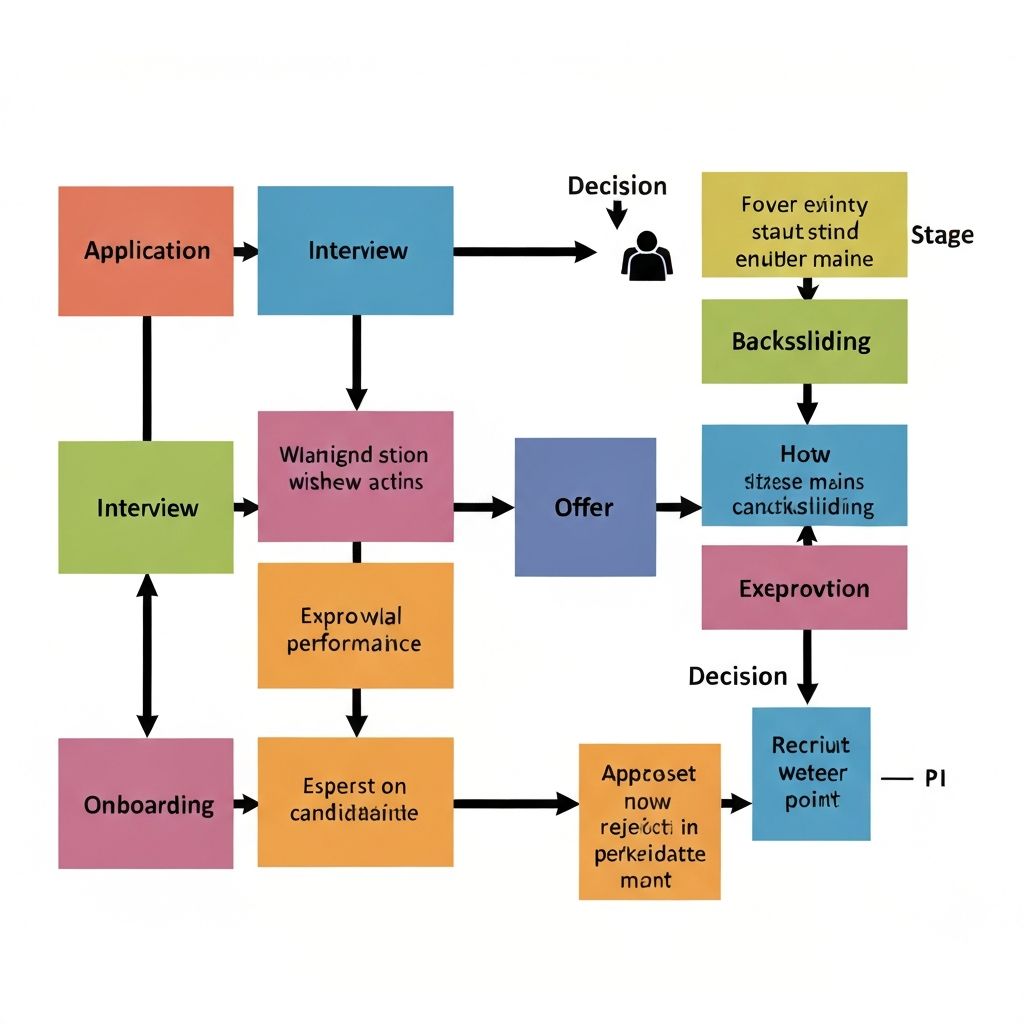
Workflow Standardization
Configurable by branch: a consistent workflow model for candidate progress paired with rules and automation so each branch could maintain its own process while operating within shared platform standards.
Standard Workflow Stages
The system emphasized clear handoffs, visible status, and repeatable actions that reduce recruiter admin time.
Branch Configuration
Each branch/company could maintain its own process modes while still operating within a shared platform standard. This supported distinct workflows and styles without fragmenting the user experience.
Automation Opportunities
Identified and designed automation helpers including note templates/taglines, reusable text snippets, and repeatable actions like call sheets to reduce manual overhead.
Workflow State Machine
Key Capabilities
Core system capabilities designed to address the highest-friction workflow failures identified in research.
Dual Search Modes
Keyword + Boolean-style searching with control over which fields are searched.
Advanced Filtering
Narrow large result sets by location, clearance/qualification flags, recency, and more.
Search History
Saved searches to reduce repeated setup for complex queries.
Cross-Branch Search
Multi-site search to reduce duplicate candidate records across separate databases.
Candidate Profiles
Clear status indicators, better resume handling, and structured notes.
Security & Access
Role-based access and 2-factor authentication UX patterns for secure access.
Additional System Improvements
Automation Helpers
Note templates, reusable text snippets, repeatable actions
Reliability Improvements
Auto-save patterns, clearer system feedback, fewer "lost work" scenarios
Prototypes (Lo-Fi → Hi-Fi)
Design progressed from low-fidelity workflow wireframes to interactive prototypes to validate search, results, candidate profiles, dashboards, and branch-specific modes.
Prototypes were used to run structured reviews and user testing, then translated into detailed user stories and acceptance criteria for agile development.
Prototype Evolution
Lo-Fi Wireframes
Workflow structure
Interactive Proto
Structured reviews
User Testing
Validation feedback
Dev Handoff
User stories + AC
Operating Mechanisms
Processes and systems for delivery coordination, stakeholder alignment, and quality assurance.
Agile Delivery
Jira + Confluence for backlog management, decisions, and visibility across the team.
Stakeholder Reviews
Regular reviews for workflow approvals and scope tradeoffs at each milestone.
Iterative Design
Prototype-based feedback loops to refine designs before development commitment.
Build Support
UI testing, feedback, and usability refinements during development.
Outcomes (Proprietary / Non-Numeric)
The replacement system shipped on schedule and successfully transformed the recruiting workflow. Post-deployment metrics are proprietary.
Key Outcomes
- Successfully decoupled Fortitude from the legacy FileMaker experience
- Streamlined recruiter workflows with improved navigation and reduced friction
- Improved candidate search and visibility across branches/locations
- Automation reduced manual overhead and inconsistency
- Created a scalable foundation for continued enhancement
Stakeholder Feedback
- Stakeholder feedback confirmed significant improvement to day-to-day recruiting operations
- Recruiters reported less context switching and faster candidate profiling
- Branch managers appreciated configurable workflows within shared standards
- Platform positioned for future feature expansion
All Artifacts (Gallery & Downloads)
Key deliverables from discovery, design, and development phases. Due to proprietary nature, artifacts are available upon request.
Personas
Available upon request
Shadowing Summary
Available upon request
Requirements Document
DOC
Available upon request
User Stories & Backlog
DOC
Available upon request
Mood Board / Style Guide
Available upon request
Wireframes & Prototypes
XD
Available upon request
Related Products
Explore other case studies showcasing similar methodologies across diverse industries and platforms.
Let's Discuss Your Project
Have a similar challenge? Let's explore how strategic design thinking can drive measurable results for your organization.