Developer Experience Enablement
Standardized tooling, onboarding, and delivery workflows for a secure enterprise environment.
Overview
In regulated environments, onboarding and "getting to productive" is often the hidden bottleneck, especially when networks are isolated and documentation drifts out of date. New engineers can spend days (or weeks) fighting setup, hunting tribal knowledge, and rebuilding the same foundations across teams.
I led a developer experience enablement initiative that treated onboarding and delivery as product problems. We created an enterprise "boilerplate" that packaged the correct tools, configurations, UI patterns, and workflow standards—paired with automation, onboarding guidance, and feedback loops—so new developers could contribute quickly and teams could scale without losing consistency.
This work became a force multiplier across multiple development teams: reducing onboarding friction, improving quality gates, and accelerating time-to-value without compromising security or governance.
Project Details
Role
Product Director / Program Lead (Developer Experience + Platform Enablement)
Also served as: Product Owner + UX Director + Scrum Master (as needed)
Timeline
Multi-year enablement delivered alongside ongoing platform modernization (phased rollout)
Team
Led and coordinated developers across multiple teams; partnered with engineering leadership and delivery stakeholders
Deliverables
Enterprise developer boilerplate • Component/pattern standards • Onboarding workflow • Documentation + tutorials • CI/CD enablement guidance • Feedback loop mechanism • Adoption playbook
Tools
Jira • Confluence • Design system tooling (Figma/Adobe as needed for patterns + documentation) • DevOps workflows (CI/CD, automated testing, versioning)
Discovery
Mapped the path from new developer access to first meaningful contribution.
Identified setup pain points, failure modes, and workflow friction across teams.
Reviewed existing handoffs: what breaks, what goes stale, what is missing.
Analyzed user stories and UAT criteria to reduce 'building the wrong thing.'
Iterative validation through pilot onboarding runs and rollout feedback.
Define
Problem Synthesis
Onboarding Friction
New developers spent 1-2 weeks getting productive due to fragmented documentation and tribal knowledge dependencies.
Inconsistent Delivery
Teams built differently, leading to rework, integration friction, and quality inconsistencies across the platform.
Documentation Drift
Static documentation went stale quickly, creating gaps between written guides and actual platform state.
Developer Workflow Loop
User Stories
"Get productive quickly without hunting for tribal knowledge"
Automated setup with golden path and self-service onboarding hub
"Ensure consistent output quality across team members"
Reusable patterns, templates, and shared component library
"Keep enablement current as platform evolves"
Feedback loops and iteration backlog tied to platform releases
Design
Preconfigured project structure, services, and 'right defaults'
Reusable UI patterns and interaction standards to speed delivery and reduce inconsistency
Step-by-step onboarding workflow, tutorials, and troubleshooting paths
Intake mechanism for gaps/issues + iteration backlog so enablement evolves with the platform
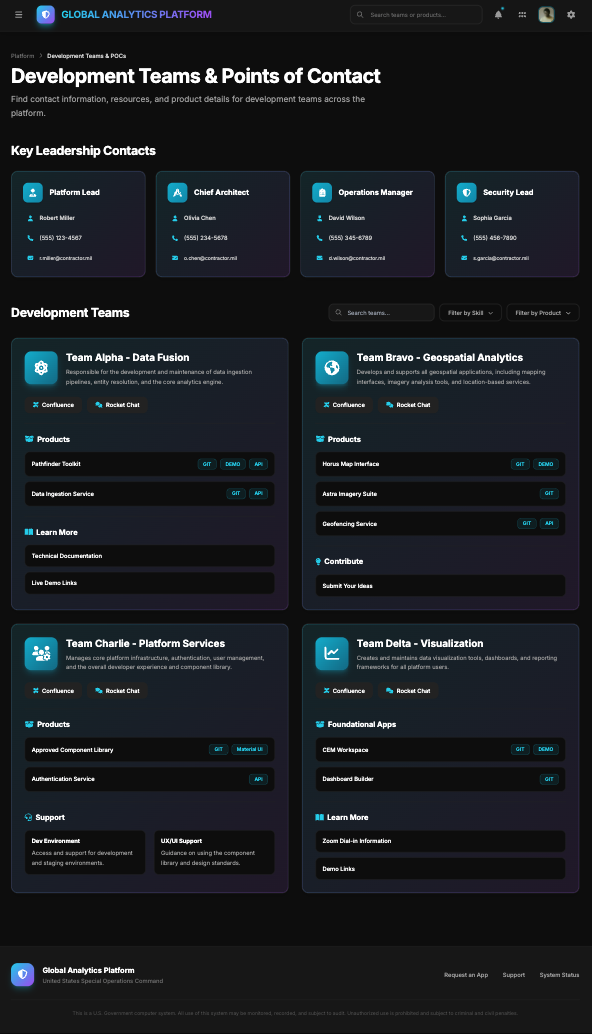
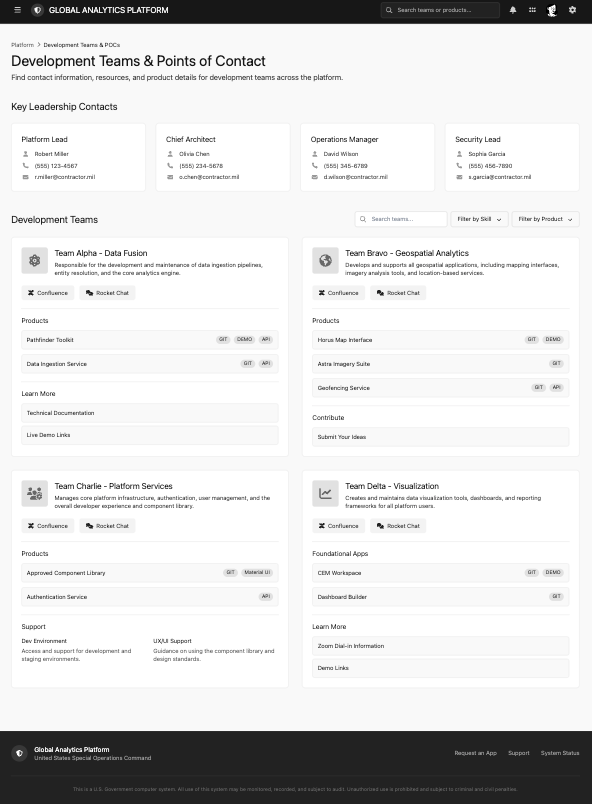
Design Evolution: Low to High Fidelity
Drag the sliders to compare wireframe prototypes with final high-fidelity designs.
Development Teams & Points of Contact
Developer Resources Hub
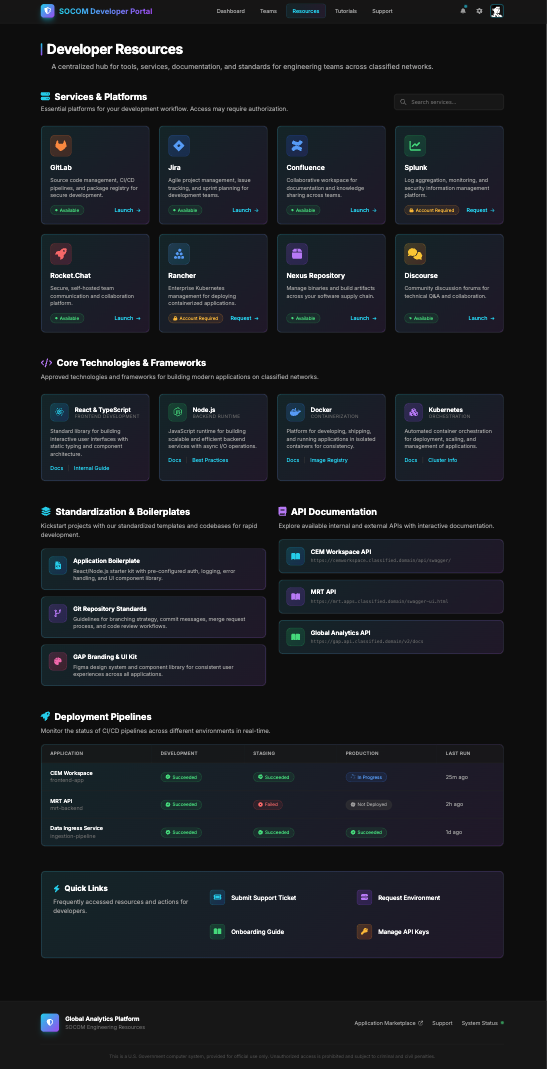
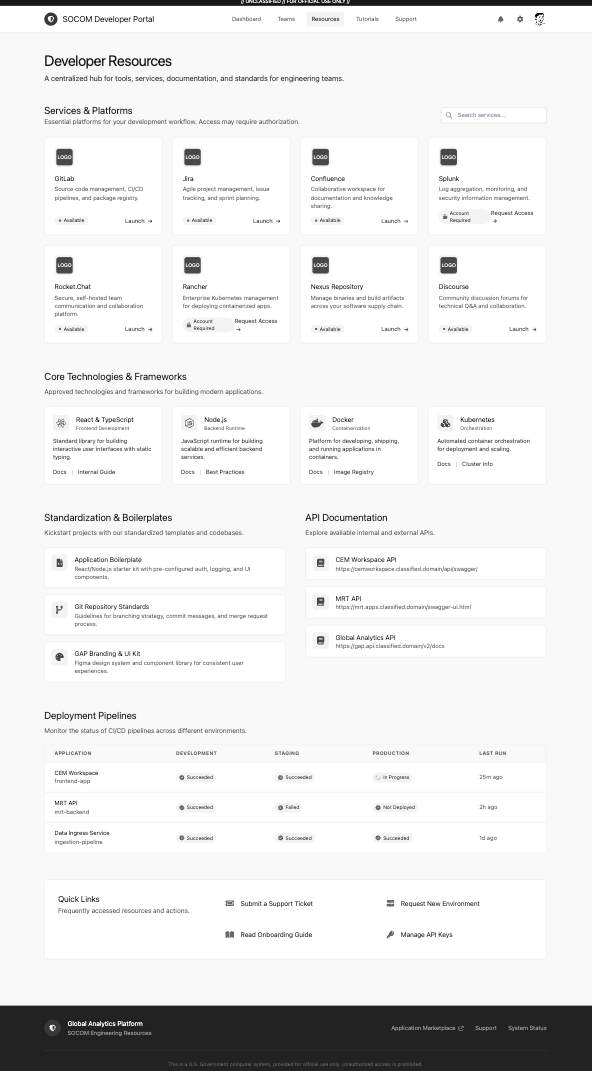
Click and drag each slider left or right to reveal the design progression
Deliver
Onboarding Time Reduction
From ~2 weeks to ~8 hours after access provisioning, improving time-to-productivity and reducing reliance on tribal knowledge.
Manual Steps Automated
Onboarding steps that previously took 4–5 days when followed manually from static documentation were automated.
Cross-Team Consistency
Improved consistency across teams through reusable patterns and shared standards, reducing rework and accelerating delivery.